How to Prioritize Technology Investments on a Limited Budget


Determining your technology investment priorities is the single most critical challenge of every annual planning cycle, especially when budgets remain capped. What separates high-performing organizations from the rest is rarely the absolute size of their spend, but the clarity and discipline of their prioritization sequence.
A limited budget is not an obstacle to digital transformation; the real bottleneck is the absence of an objective evaluation framework. When every department argues that its project is urgent, allocations default to internal politics or whoever speaks the loudest.
To break this gridlock, you need an objective scoring method that can be defended in the boardroom. Below is a summary of the framework to structure your decision-making:
- Consolidate all proposals into a single backlog.
- Convert proposals into measurable problem statements.
- Evaluate every proposal using identical scoring criteria.
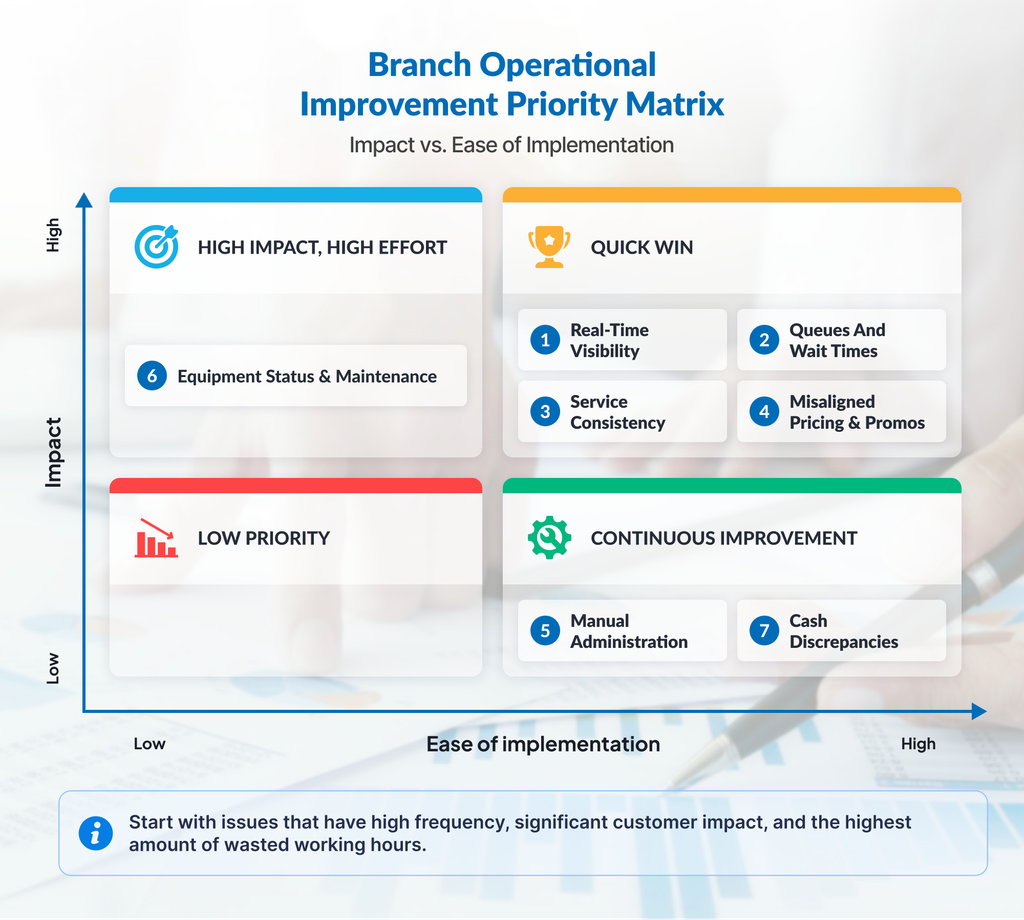
- Separate quick-win automation from structural investments.
- Test operational readiness before locking in the sequence.
- Build a 12-month tech roadmap with clear evaluation gates.
Why a Large Budget Does Not Guarantee Digital Transformation Success
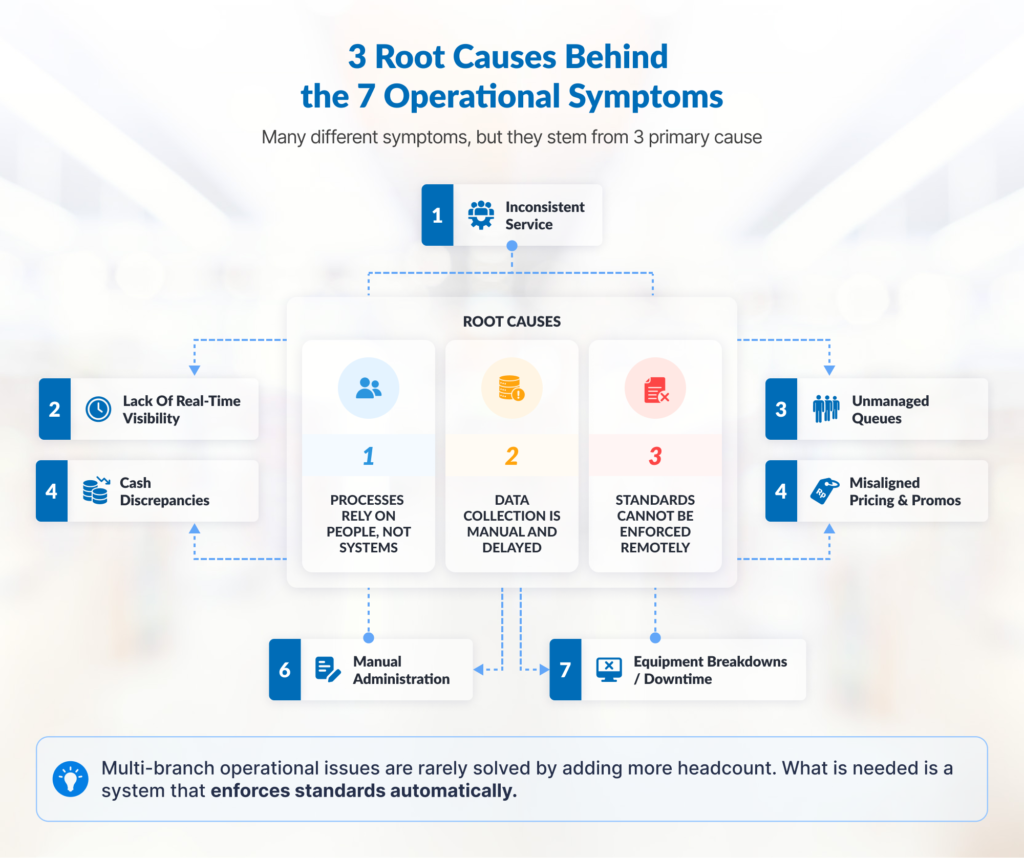
In technology initiatives, project failures rarely stem from a lack of funding. More often, they result from poor execution sequencing. When organizations try to solve every operational inefficiency simultaneously, capital is diluted across too many active fronts, leading to project fatigue before any business unit sees a tangible return.
Three recurring pattern failures frequently undermine corporate IT investments:
- Automating unstandardized processes: Purchasing advanced systems to cover up broken, non-standardized workflows only accelerates inefficient outcomes.
- Chasing multi-year mega-projects first: Committing full resources to massive infrastructural overhauls before delivering a single quick win drains executive support and political capital.
- Spreading the technology budget evenly: Splitting funds equally across all departments to avoid friction results in multiple half-finished implementations that fail to move key metrics.
The consequence is predictable: management support erodes, change fatigue sets in, and the initiative stalls before delivering its intended value.
With over 34 years of experience in handling strategic projects and supporting businesses across various industries, PT Murni Solusindo Nusantara has observed a consistent pattern: organizations that begin with a tight, well-defined operational scope and measurable targets scale far more successfully than those attempting simultaneous, enterprise-wide rollouts. Success is driven by precision in sequencing, not budget scale.
Six Steps to Prioritize Your Technology Investments
To build a defensible technology investment strategy, move systematically through these six operational steps.

Step 1: Consolidate All Proposals into a Single Backlog
Collect every technology request across all business units – including long-standing operational complaints that have never been formally submitted.
- Action: Require department heads to submit the core operational problem they need to solve, rather than a specific product or tool vendor.
- Output: Unified candidate list, unrated.
Step 2: Convert Proposals into Measurable Problem Statements
Vague requests lead to misaligned investments. Refine every entry from a solution preference into a quantified business issue.
For example, instead of “We need a modern queue system,” reframe it to: “Customer wait times at our top 12 branches average 22 minutes during peak hours, and we lack centralized monitoring.“
The output? Problem statement document with initial baseline metrics.
Step 3: Evaluate Every Proposal Using Identical Scoring Criteria
Evaluating technology proposals without a standardized framework often leads to subjective decisions, where projects are greenlit based on executive preference or departmental noise rather than strategic value. To ensure an objective assessment, leadership must evaluate every consolidated request through a unified multi-factor matrix:
- Eliminate Departmental Bias: Applying weighted scoring criteria across all submissions on equal terms strips away internal politics and establishes a transparent baseline for comparison.
- Convert Noise into Data: Passing candidates through this structured evaluation converts fragmented, competing proposals into a clear, rank-ordered backlog backed by objective numerical scores.
This systematic approach provides leadership with a defensible, data-driven foundation for final budget allocations.
Step 4: Separate Quick-Win Automation from Structural Investments

Categorize your ranked backlog into a two-track execution plan based on impact and implementation complexity. Quick-win automation focuses on high-impact initiatives that can be realized within 3–6 months without disrupting legacy core architecture. In contrast, structural investments represent foundational projects that yield significant long-term strategic value, though they require substantial delivery time and change management.
Allocating a dedicated portion of your technology budget to quick wins builds immediate operational momentum and generates the political capital needed to fund and sustain larger structural shifts.
Step 5: Test Operational Readiness Before Locking in the Sequence
A high strategic score indicates that a technology proposal has strong merit, but it does not guarantee the project is ready for immediate deployment. Attempting to automate an unstandardized workflow or integrate software into unreliable data environments frequently leads to budget overruns and operational friction.
Before locking in your deployment timeline, audit every shortlisted initiative against four operational readiness gates:
- Workflow Standardization: Is the underlying process clearly defined, documented, and operating consistently across teams?
- Data Integrity: Are baseline metrics clean, structured, and easily accessible for integration and measurement?
- Accountability: Is there a dedicated internal process owner responsible for driving adoption and managing operational change?
- Infrastructure Compatibility: Can your existing architecture support the new technology without requiring an immediate, costly overhaul?
By evaluating proposals through these practical criteria, leadership prevents premature rollouts and converts a theoretical priority list into a vetted, realistic deployment sequence engineered for successful execution.
Step 6: Build a 12-Month Roadmap with Evaluation Gates
To ensure your technology strategy moves smoothly from planning to execution, structure your approved initiatives into a phased 12-month roadmap. Spreading projects across a three-wave rollout prevents resource exhaustion, mitigates operational disruption, and establishes clear performance checkpoints across the fiscal year.

The true strength of this phased structure lies in its evaluation checkpoints. Mandating explicit review gates at the conclusion of each wave enables leadership to measure actual performance against target KPIs, make necessary scope adjustments, and reallocate remaining capital based on verified results.
Without predefined evaluation gates to govern transition between phases, a multi-year technology roadmap is merely a purchase list rather than a defensible operational plan.
Scoring Framework: Six Criteria to Evaluate Technology Proposals
To ensure objective evaluation, apply a standardized scoring matrix. The weights below serve as a practical baseline; adjust the weightings to align with your organization’s immediate strategic goals.
| Evaluation Criteria | Assessment Focus | Suggested Weight |
| Customer Impact | Does this directly improve customer experience, service speed, or satisfaction? | 25% |
| Cost & Labor Efficiency | How much manual effort, error cost, or operational overhead does this remove? | 20% |
| Risk & Compliance Mitigation | Does inaction expose the business to security, regulatory, or revenue loss risks? | 20% |
| Process & Data Readiness | Is the current workflow stable, documented, and supported by reliable data? | 15% |
| Implementation & Lifecycle Readiness | Can this be deployed with minimal disruption to ongoing operations? | 10% |
| Scalability Across Branches | Can a successful pilot be expanded to other locations without linear cost increases? | 10% |
How to Apply the Matrix
- Rate each candidate project from 1 (Lowest) to 5 (Highest) across all six criteria.
- Multiply each score by the assigned criterion weight and sum the results for a final score (1.0 to 5.0).
- Have at least three cross-functional leaders (e.g., IT, Finance, Operations) score the projects independently to average out individual bias.
- Adjustment Example: If your business faces upcoming regulatory compliance deadlines, increase the weight of Risk & Compliance Mitigation to 35% and reduce Ease of Implementation accordingly.
Evaluation Case Study: Prioritizing Three Competing Proposals
To understand how this framework functions in practice, consider an illustrative scenario involving a 20-store retail network evaluating three competing internal requests:
- Proposal A: Automated price update system at the store shelf level.
- Proposal B: Centralized customer queue management system.
- Proposal C: Full replacement of point-of-sale hardware.
Illustrative Example Only
| Evaluation Criteria | Weight | Proposal A: Shelf Pricing | Proposal B: Queue System | Proposal C: Cash Hardware |
| Customer Impact | 25% | Score: 4 (Weighted: 1.00) | Score: 5 (Weighted: 1.25) | Score: 2 (Weighted: 0.50) |
| Cost & Labor Efficiency | 20% | Score: 5 (Weighted: 1.00) | Score: 3 (Weighted: 0.60) | Score: 4 (Weighted: 0.80) |
| Risk & Compliance | 20% | Score: 4 (Weighted: 0.80) | Score: 2 (Weighted: 0.40) | Score: 4 (Weighted: 0.80) |
| Process & Data Readiness | 15% | Score: 4 (Weighted: 0.60) | Score: 4 (Weighted: 0.60) | Score: 2 (Weighted: 0.30) |
| Ease of Implementation | 10% | Score: 3 (Weighted: 0.30) | Score: 4 (Weighted: 0.40) | Score: 2 (Weighted: 0.20) |
| Scalability | 10% | Score: 5 (Weighted: 0.50) | Score: 4 (Weighted: 0.40) | Score: 3 (Weighted: 0.30) |
| Total Score | 100% | 4.20 | 3.65 | 2.90 |
Analyzing the Outcome
- Initial Intuition vs. Scoring: Departmental heads initially favored Proposal C due to aging hardware. However, the objective matrix revealed that Proposal A delivers higher labor savings and compliance risk reduction regarding price discrepancies.
- Applying the Readiness Filter (Step 5): While Proposal B scored well on customer impact, an operational check revealed that peak-hour traffic patterns had not been tracked at 8 of the 20 branches. Consequently, Proposal B was routed to Wave 2 to allow time for baseline data gathering, making Proposal A the clear Wave 1 pilot candidate.
This structured approach transforms subjective debates into clear, defensible business decisions for executive leadership.
How to Start When Your Technology Budget Is Severely Restrained
Mid-sized enterprises often feel excluded from digital transformation conversations because they assume full-scale enterprise software rollouts are required. You can achieve meaningful operational gains with tight capital constraints by adopting targeted execution strategies:
- Run single-location pilots: Test technology in one high-volume branch to validate operational metrics before committing capital to a multi-site expansion.
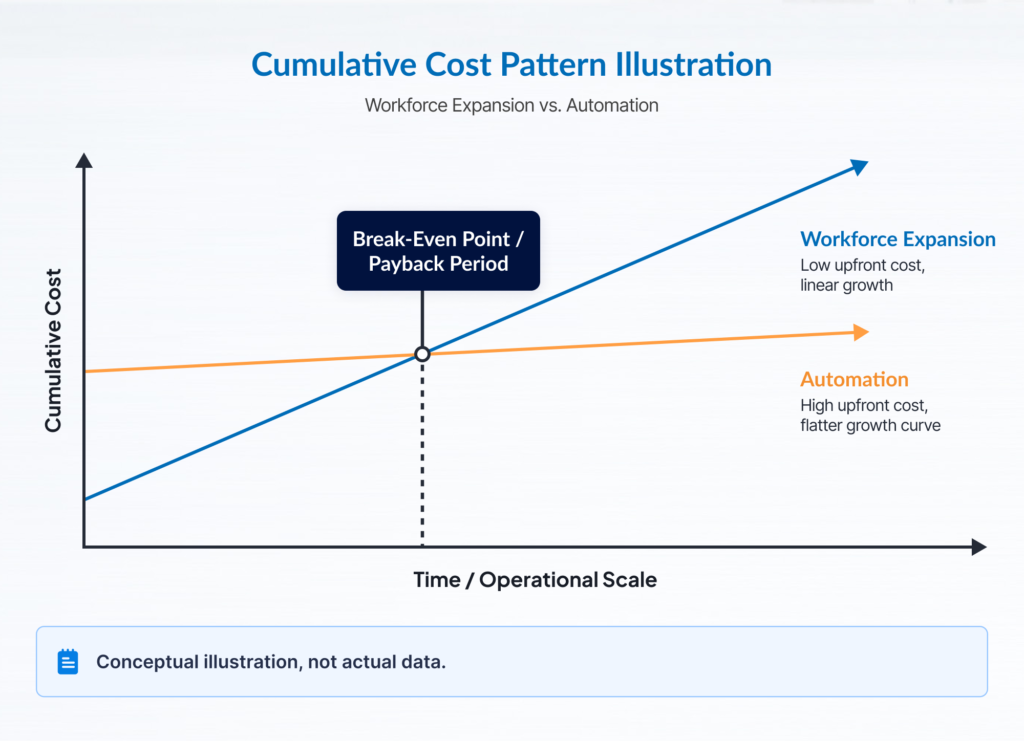
- Leverage non-purchase acquisition models: Utilizing device leasing or hardware outsourcing shifts capital expenditure (Capex) into manageable operational expenditure (Opex), improving project feasibility.
- Focus on data accuracy first: Prioritize tools that reduce human entry error. Operational errors across branch operations are significantly more expensive over time than operational delays.
- Use external discovery consultations: Partner with experienced technology integrators to audit your assumptions during the planning phase. Most initial discovery reviews are non-binding and help refine project scope before budget lock-in.
PT Murni offers consultative discovery sessions and flexible hardware leasing or outsourcing options to assist organizations in optimizing capital deployment without compromising operational standards.
Common Pitfalls When Setting IT Investment Priorities
Avoid these common strategic missteps when evaluating your technology backlog:
- Evaluating proposals with moving standards: Changing evaluation criteria based on which executive sponsors a project leads to inconsistent decisions.
- Equal budget distribution: Splitting funds evenly across divisions to appease stakeholders ensures no single project gets sufficient funding to succeed.
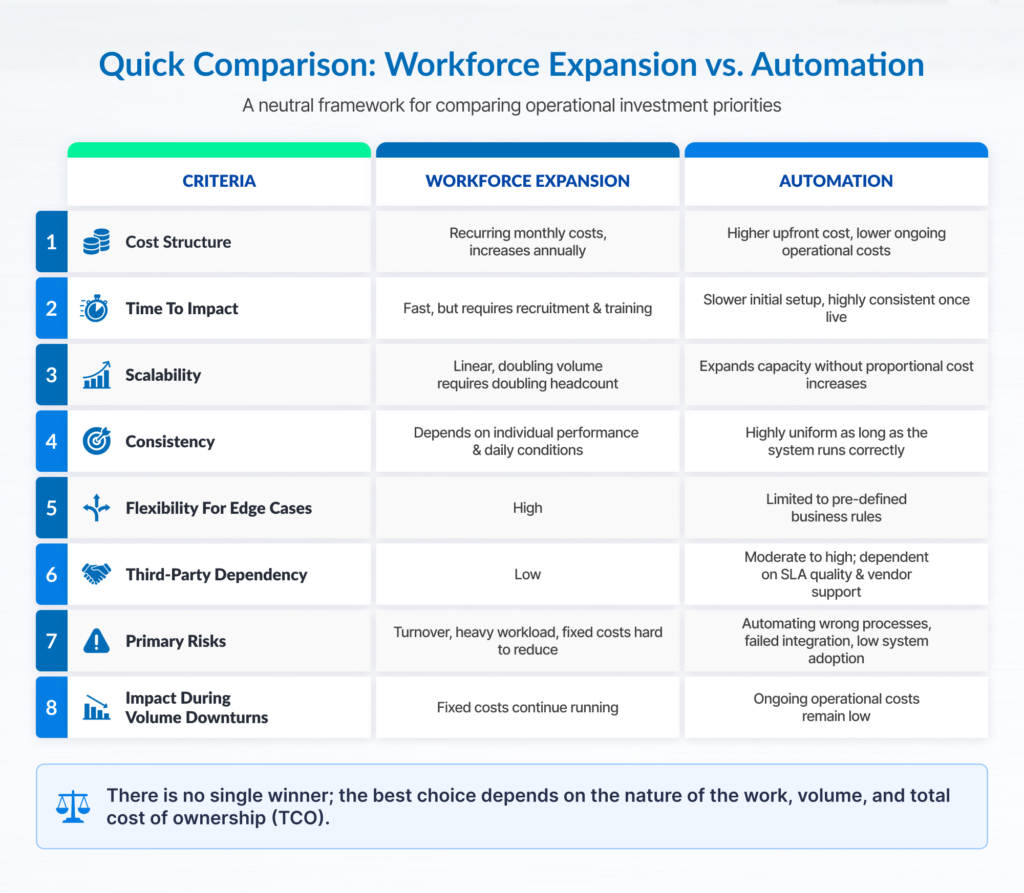
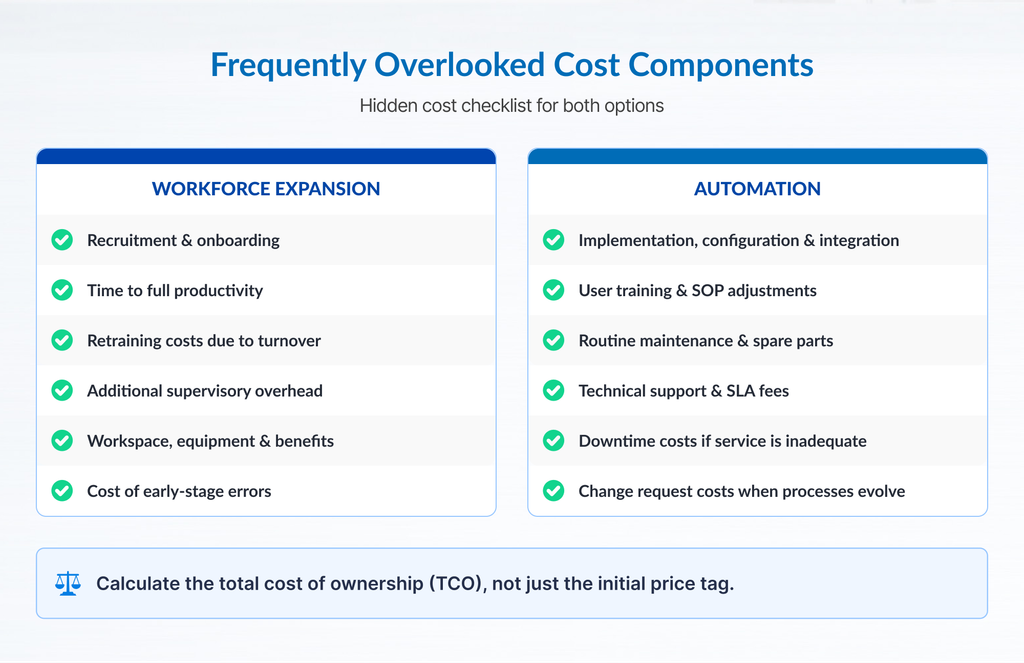
- Ignoring Total Cost of Ownership (TCO): Omitting ongoing maintenance, software updates, and user training from year-one budgets creates funding shortfalls later.
- Skipping process readiness checks: Deploying software over inefficient processes automates bad habits.
- Roadmaps without review gates: Running multi-phase projects without predefined evaluation gates allows underperforming initiatives to consume capital indefinitely.
- Unplanned operational downtime: Failing to verify hardware support SLAs and post-implementation maintenance coverage leads to unexpected operational losses.
High-Priority Target Areas Across Industry Sectors
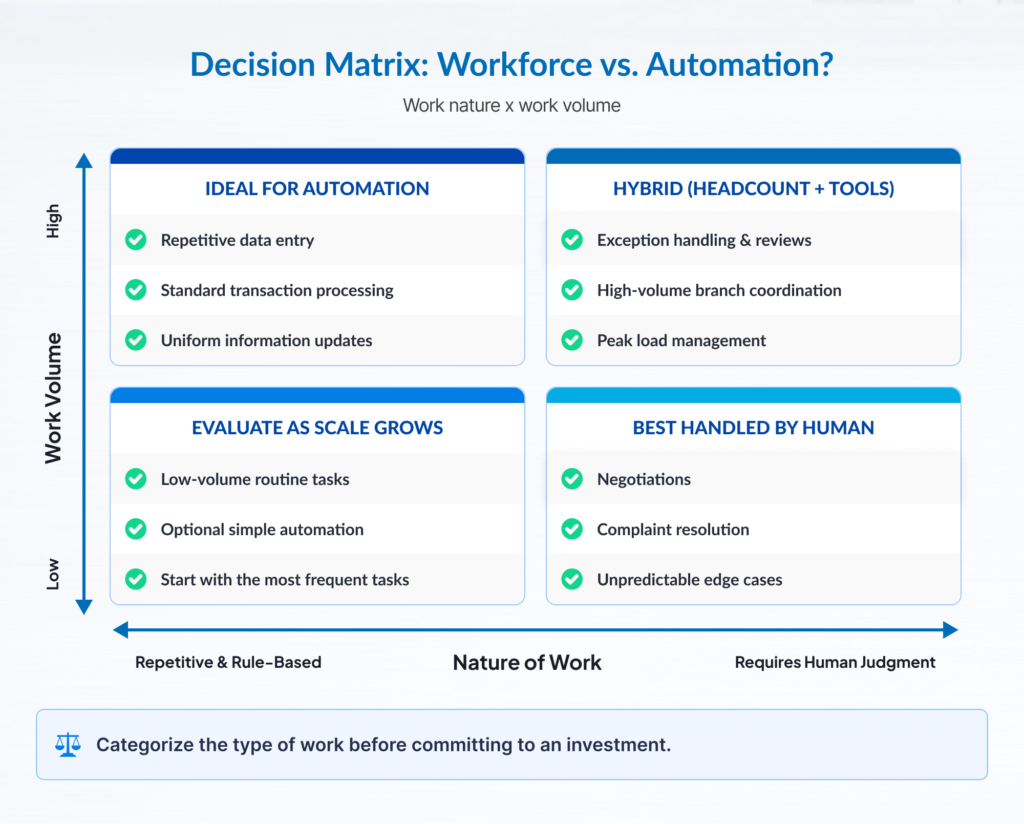
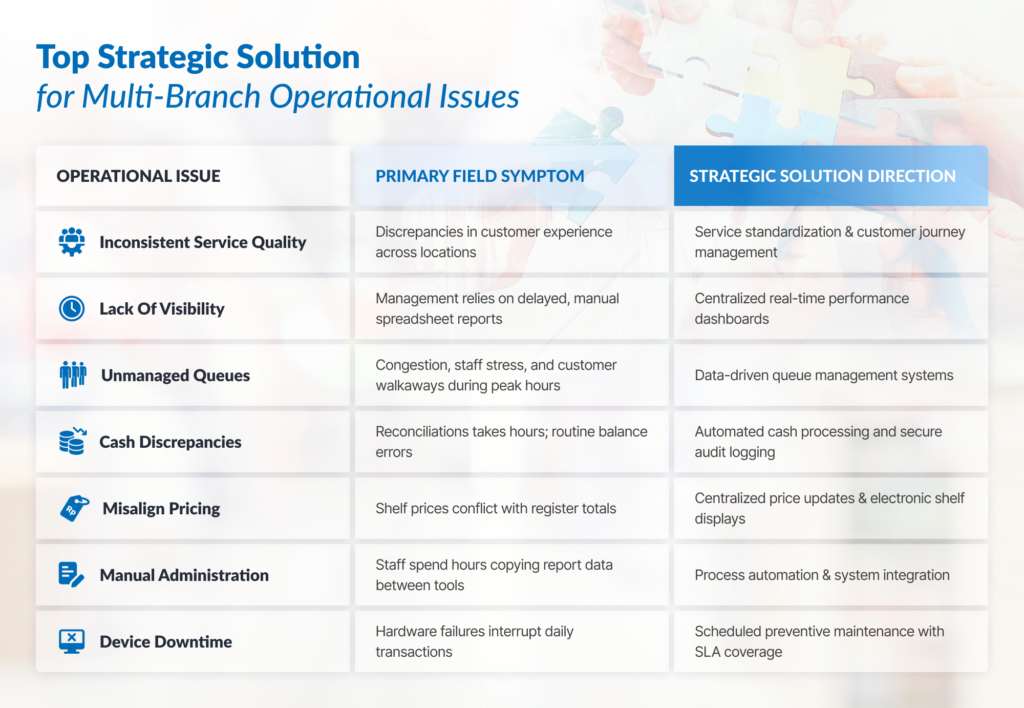
When applying the scoring framework, certain functional operations regularly rank near the top due to their direct impact on customer satisfaction, cost reduction, and scalability:
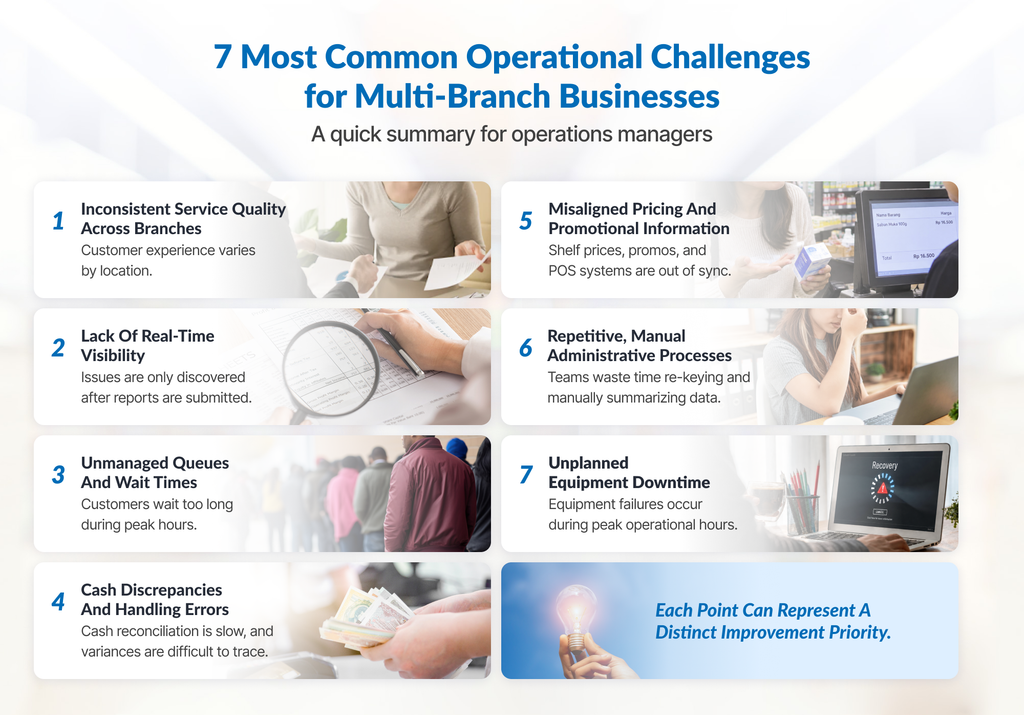
- In-Store Price & Product Accuracy: Aligning shelf pricing with central databases prevents costly errors at checkout. Learn how modern price automation strategies reduce margin loss while protecting customer trust.
- Customer Flow & Service Management: Automated queue processing reduces actual and perceived wait times in high-traffic environments. See how optimizing customer experience and self-service solutions can streamline your peak-hour operations.
- Cash Processing & Reconciliation: Automating cash counting, authentication, and deposit reconciliation removes manual errors across branch networks. Explore how integrated cash management solutions create more efficient branch workflows.
- Cross-System Administrative Automation: Deploying software robotics to handle repetitive data tasks frees staff for higher-value work. Discover how robotic process automation can eliminate time-consuming admin work to boost team productivity.
- Centralized Public Information Displays: Standardizing digital communications ensures accurate, real-time updates across multiple locations. Dive deeper at how centralized display solutions improve brand consistency and operational agility.
Frequently Asked Questions
What portion of our tech budget should go to quick wins?
Allocating 20–30% of your available technology budget to quick wins is ideal. This ensures immediate operational improvements and measurable ROI within 3 to 6 months, building organizational momentum while preserving the majority of funds for foundational structural initiatives.
How should we break a tie between two proposals with identical scores?
When total scores match, prioritize the project with the higher Process & Data Readiness score. A proposal backed by clean baseline data and a standardized workflow presents lower implementation risk and delivers faster time-to-value.
Should we always fix internal processes before buying technology?
Yes. Automating an unstandardized or inefficient process simply yields inefficient outcomes at a faster rate. Standardizing core workflows and key performance indicators (KPIs) first ensures that software integration enhances real operational performance.
How do we manage departments whose proposals were not prioritized?
Provide full transparency by sharing the weighted scoring matrix and criteria used during evaluation. Show where their proposals currently sit on the backlog, and define the specific operational readiness metrics required for their initiatives to qualify for subsequent funding waves.
Is a single-branch pilot sufficient for evaluating enterprise-wide rollouts?
A single-site pilot is sufficient if the location represents typical operational complexity, peak volume, and staffing profiles. However, if your branch network exhibits significant regional or operational variance, expand the pilot to two or three distinct branch types before full scaling.
How often should leadership review the technology roadmap?
Review the technology roadmap quarterly at the end of each evaluation gate. This frequency allows leadership to adjust capital allocation based on real pilot results, changing market conditions, or shifting regulatory requirements, keeping the IT strategy aligned with business needs.
Build a Defensible Technology Plan
A limited budget forces strategic clarity. By evaluating every project against identical criteria, separating quick wins from long-term investments, and establishing review gates throughout your roadmap, you turn technology allocation into a predictable driver of operational growth.
Before locking in your next annual budget, validate your assumptions with an experienced technology partner. Schedule a consultative discovery session with the PT Murni team to review your operational priorities against field-tested frameworks developed across 12+ industry sectors.