This year marks a significant milestone as we celebrate the 31st anniversary of PT Murni. We would like to take this opportunity to reflect on over three decades of continuous improvement, innovation, growth and success.
We would like to extend our heartfelt thanks to all our valued clients, including the Central Bank, many leading commercial banks, and other corporate clients from various industries.
Your unwavering trust and support have been a driving force behind our accomplishments. We would not have been able to reach this point without your trust and partnership, and we look forward to many more years of collaboration, growth, and shared success.
Moving forward, our goal is to not only meet your needs, but to exceed them by consistently delivering innovative solutions and exceptional customer experience.
PT Murni is currently building a better and stronger groundwork to become a digital business transformation enabler. This includes setting up a new corporate office, and the ongoing transformation of human capital, business process, products, solutions, services, and business models.
We are confident that this transformation will enable us to expand our support and provide even greater value, business benefits, efficiency, and customer experience that leverage business outcomes to all of our corporate clients.
The tagline “Moving Beyond as One” encapsulates the spirit of all stakeholders that make PT Murni what it is today. This milestone reflects a shared effort fuelled by the dedication and determination from all stakeholders. Hence, we would like to extend our immense gratitude to our staff, clients, business partners, and principals for their unwavering support.
Here’s to 31 years of achievement! Let’s continue to move beyond as one and embrace the endless opportunities that lie ahead together
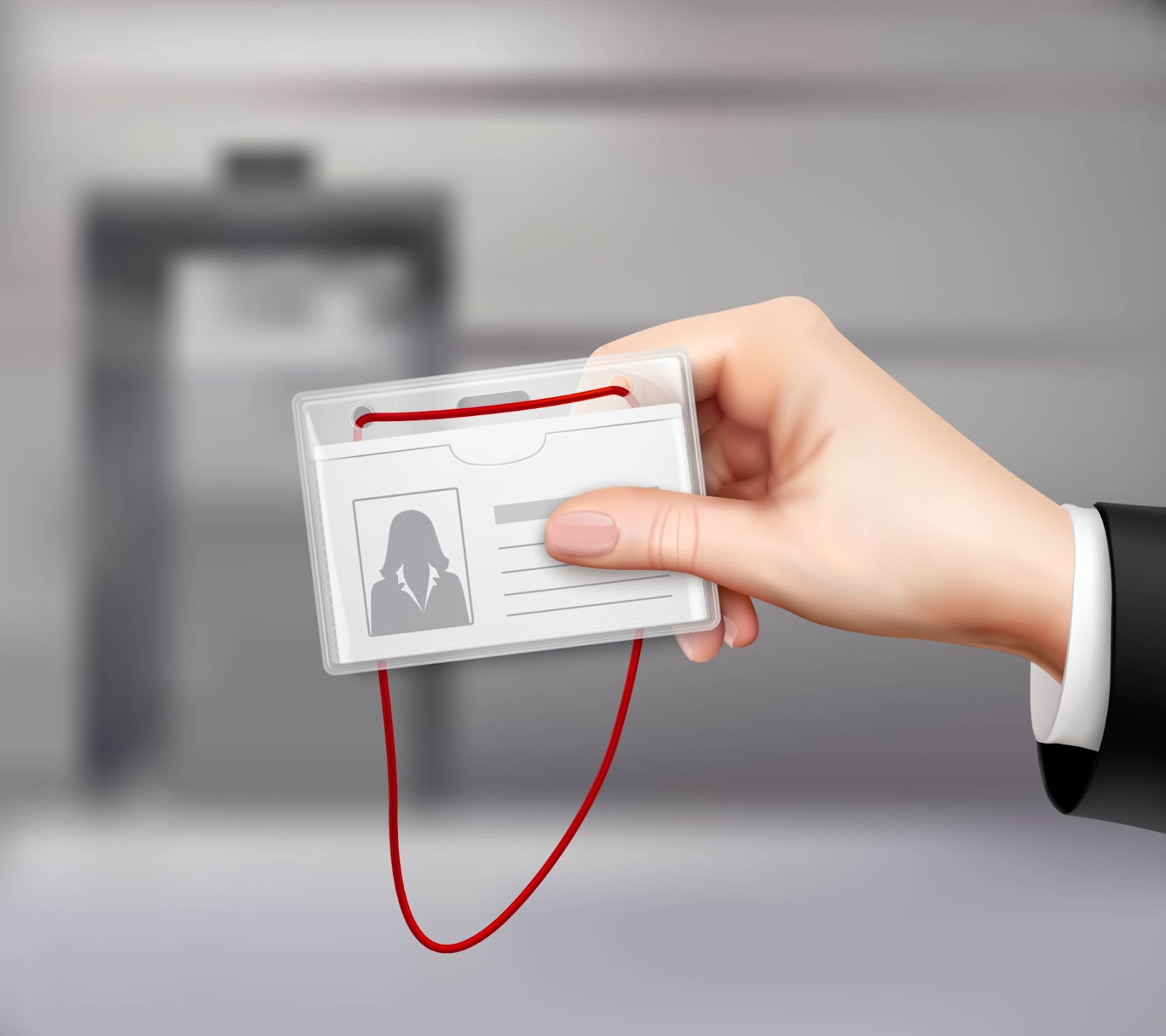
An ID card serves as proof of membership within an institution. The use of ID cards has become commonplace in society and varies — ranging from employee ID card, student card, to healthcare access.
The use of ID cards is considered safer and more efficient for verifying an individual’s membership status. This is supported by personalized card designs that reflect the identity of the institution.
To enhance the security of this information, you might consider issuing your own identity cards by investing in quality card printing machines. But, how to choose the best suitable ID Card printer for your office?
The ID Card printers function similarly to other printing devices, allowing you to print a variety of information such as images, text, and logos onto print media—specifically, PVC plastic surfaces that are the size of an ATM card.
These types of printing machines are beneficial in streamlining the process and time for printing various types of cards, including:
Employee ID cards
Student ID cards
Healthcare cards
Transportation cards
Access Card
Loyalty cards/Event cards
Not only does this enhance operational efficiency, but it also bolsters information security by eliminating the need for a third-party printing company to print cards containing potentially confidential data.
With numerous brands and models available in the market, it’s advisable for you to consider the following factors before choosing an ID card printer:
Printing Volume and Frequency
Determine how many ID cards you’ll need to print on a regular basis. This will help you choose between entry-level printers for occasional printing and higher-end models for high-volume tasks.
Single-Sided vs. Dual-Sided Printing
Decide if you need to print on one or both sides of the ID card. Dual-sided printers allow you to include more information and design elements on both sides, in one process.
Processing Speed
Faster printers are ideal for large organizations or events with tight timeframes.
Print Quality
Look for a printer with a high resolution (measured in dpi) for sharp text, clear images, and accurate colors.
Encoding Options
If you plan to include features like magnetic stripes or smart chips on the cards, ensure that the printer supports these encoding options.
Additional Tips
Think about product upgradeability and some additional features that match your unique needs. For example, if you prefer durability consider ID Card printers with lamination capability. Or if you feel like adding more layers of security, you can look for printers with security features.
Based on these considerations, here are the recommended ID card printers for your consideration:
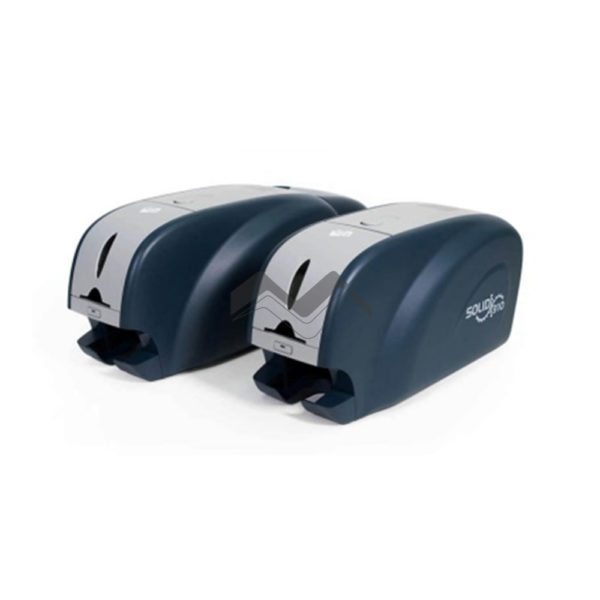
Ideal for those seeking a cost-effective card printing solution with professional quality, the IDP SOLID-310 Series comes in two types: the SOLID-310S single-sided printer and SOLID-310D dual-sided printer. These printers offer high-speed printing and resolutions of 300 dpi and 600 dpi, respectively.
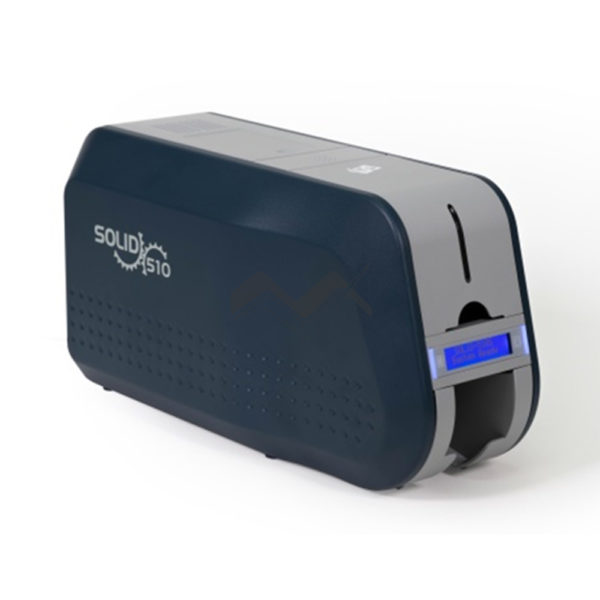
The IDP SOLID-510 Series card printing machine delivers processing speed and performance suited for medium-volume printing tasks. This series provides high-resolution print results of up to 1200 dpi and can also be upgraded with the patented IDP Direct Lamination Technology for card lamination.
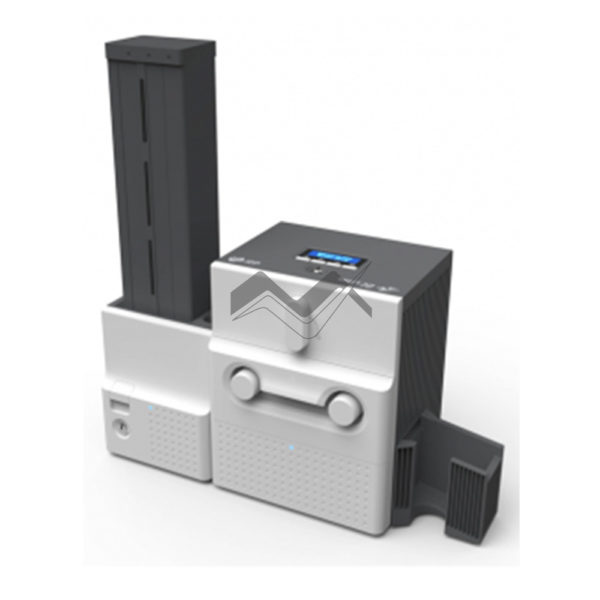
The standout feature of the IDP SOLID-700 Series is its modular design and high processing capacity. Printers from this series can be conveniently configured to meet your needs by adding modules for dual-sided printing, laminating, and output hoppers. With its large capacity and high speed, this series is suitable for high-volume card printing and continuous operation.
ID Card Printer IDP SOLID-510 Series
For further information about the products, please reach out to our hotline at 1500 903 or contact us via email at info@murni.co.id. You can also visit this Passbook Printer page to explore products from similar categories.
For example, Hospital. Mobile carts that carry medical equipment, and documents to monitor diagnoses, are central to helping nurses work. If it is constrained, the effectiveness of health services will be disrupted.
The main problem is the battery life supporting the mobile cart. In whatever industry the mobile cart is used, it must be designed and tested to the highest safety standards.
One of the challenges faced every day for workers is using inflexible tools at work. That’s why flexibility is the most significant advantage of using a mobile cart.
Ergonomic mobile workstation in industrial settings.
The flexibility that is presented after using a mobile cart will bring various benefits to businesses, such as:
Productivity – Allowing workers to be more productive as mobilization becomes more effective and completing tasks become more efficient.
Security – Operating tools that help to work comfortably and safely by reducing worker fatigue, and minimize errors.
Work Motivation – Increasing motivation. No worker wants to be in a dull and inefficient work environment. Mobile carts help to improve this.
Cost – Smart investment move. Of course, there are costs upfront; however, it will be a long-term savings because it is more effective and efficient.
The Right Choice for Mobile Cart Power Systems
Various advances in battery technology give us multiple choices in the mobile cart. Currently, many mobile carts use a swappable power system. But some depend on a fixed power system.
There are various advantages and disadvantages to each power system. In the battery-swappable power system, the characteristics are:
Can operate non-stop, 24/7
Battery portability
Multiple options
Tips for Choosing the Right Battery Technology
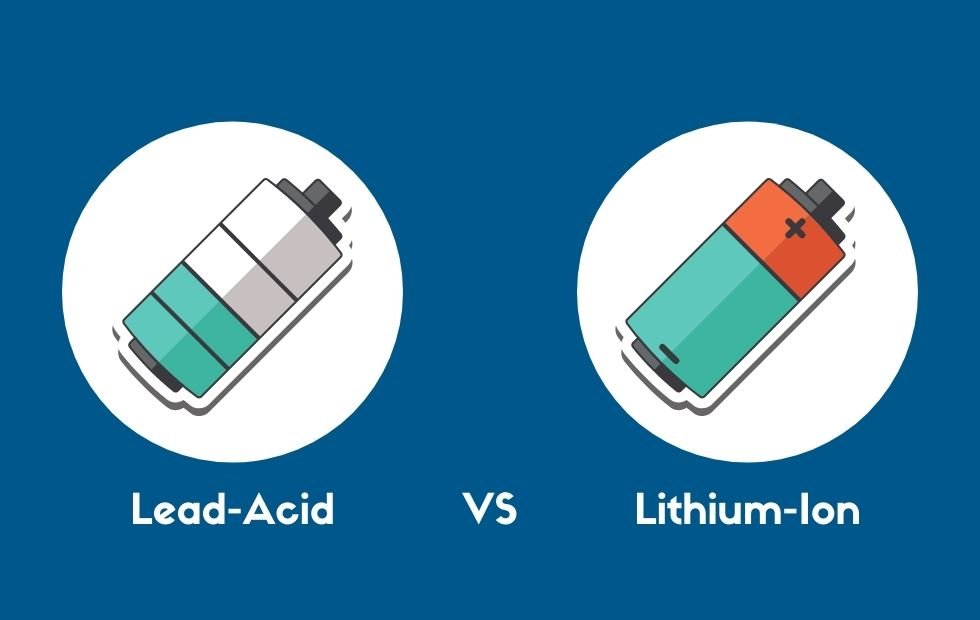
Technically, the battery technologies commonly used to power mobile carts are Sealed Lead Acid (SLA) and Lithium-ion.
LSA vs Lithium-Ion Battery Illustration. Sources: Climatebiz
The following are tips that can be noted for choosing and comparing the two battery technologies when using a mobile cart:
Capacity and Debt
SLA batteries are designed for slow but steady discharge; if the capacity decreases, the voltage drops. Whereas Lithium-ion only loses a minimum voltage if its ability decreases.
Battery Health
SLA batteries generally have a shorter lifespan than Lithium-ion. SLA needs to be replaced 1-2 years, while Lithium-ion can last up to 8-10 years.
The difference is that the health of an SLA battery will degrade over time if it is completely depleted or not kept on a proper charge. In contrast, Lithium-ion can maintain its integrity even without being fully charged.
Storage
If storing batteries is a consideration, it is necessary to understand the implications of batteries based on type. SLA batteries lose their charge up to five times faster than Lithium-ion batteries when stored.
However, there are better choices than storing Lithium-ion batteries for a long time. Lithium-ion battery held will affect battery life more than SLA battery.
Disposal
The battery is a matter of use, and responsible for its disposal. Battery waste is not friendly to the environment.
SLA batteries are considered more dangerous; that is why consumers will be charged a deposit fee when purchasing and will be returned if the SLA battery is to be disposed of. In contrast, Lithium-ion batteries are made of non-toxic materials, so the waste treatment process is relatively more straightforward.
Choosing a battery power system when using a mobile cart for business needs to be done carefully. Ensure the mobile cart you want to use has a battery power system that is efficient, optimal, and safe for your business.
To choose a mobile cart with an efficient, optimal, and safe battery power system, you can use a mobile cart from Ergotron, whose quality is guaranteed!
Are you interested in learning about the mobile cart from Ergotron? Contact our Ergotron experts by calling 1500913 or via e-mail to ergonomic@murni.co.id. Also, visit our ergonomic website and find other ergonomic products.